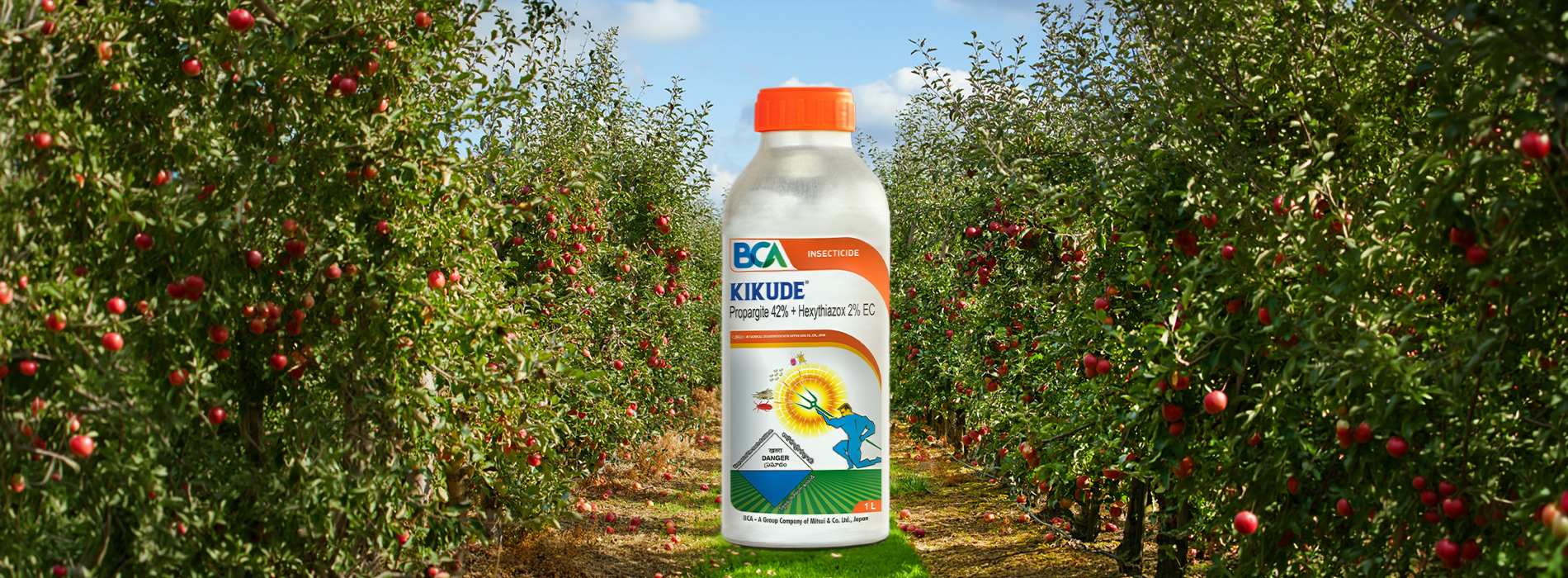
Mite Control Secrets for Apple & Tea Growers
28th April 2025
As the weather warms up and the seasonal cycle advances, cash crop growers face a completely different set of agricultural challenges. In the sweeping apple orchards of Jammu & Kashmir and Himachal Pradesh, trees enter critical pink bud and petal fall stages. Simultaneously, down in the lush tea estates of West Bengal tea farming regions and Assam, fresh flushes of premium tea leaves emerge rapidly.
While this warm weather accelerates crop growth, it also acts as a major catalyst for one of the most silent and destructive pests in plantation farming: phytophagous mites. Managing these tiny pests early in the infestation cycle is vital to protect premium-grade quality and safeguard seasonal profits. Effective apple and tea mite control is the foundation of profitable plantation farming.
Understanding the Threat: European Red Mites & Red Spider Mites
Mites are incredibly small, making them difficult to spot with the naked eye until severe visual damage has already occurred. In apple orchards, the European Red Mite (ERM) is the primary culprit. They overwinter as eggs on the bark and hatch en masse as temperatures rise. Effective European red mite treatment is essential during this stage. In tea plantations, the red spider mite and Scarlet Mite rapidly colonize the undersides of leaves.
Both species damage plants by piercing the leaf tissue and sucking out the vital cell contents and chlorophyll.
The Damage: Initially, leaves show fine yellow or white speckling. As the infestation grows, the foliage takes on a dull, bronzed, or dusty brown appearance.
The Consequence: Sapped leaves lose their ability to photosynthesize. In apples, this leads to premature leaf drop, small fruit sizes, and poor color development. In tea, it stops new flushes entirely, ruining the quality of the pluckable leaves and leaving the bushes weak and depleted.
Because mites reproduce at an exponential rate—completing a full generation in just a couple of weeks during warm weather—traditional broad-spectrum insecticides often fail. In fact, many standard chemicals accidentally kill the beneficial predatory insects that naturally hunt mites, causing a worse population rebound effect. Farmers need a dedicated, highly selective acaricide for proper orchard pest management.
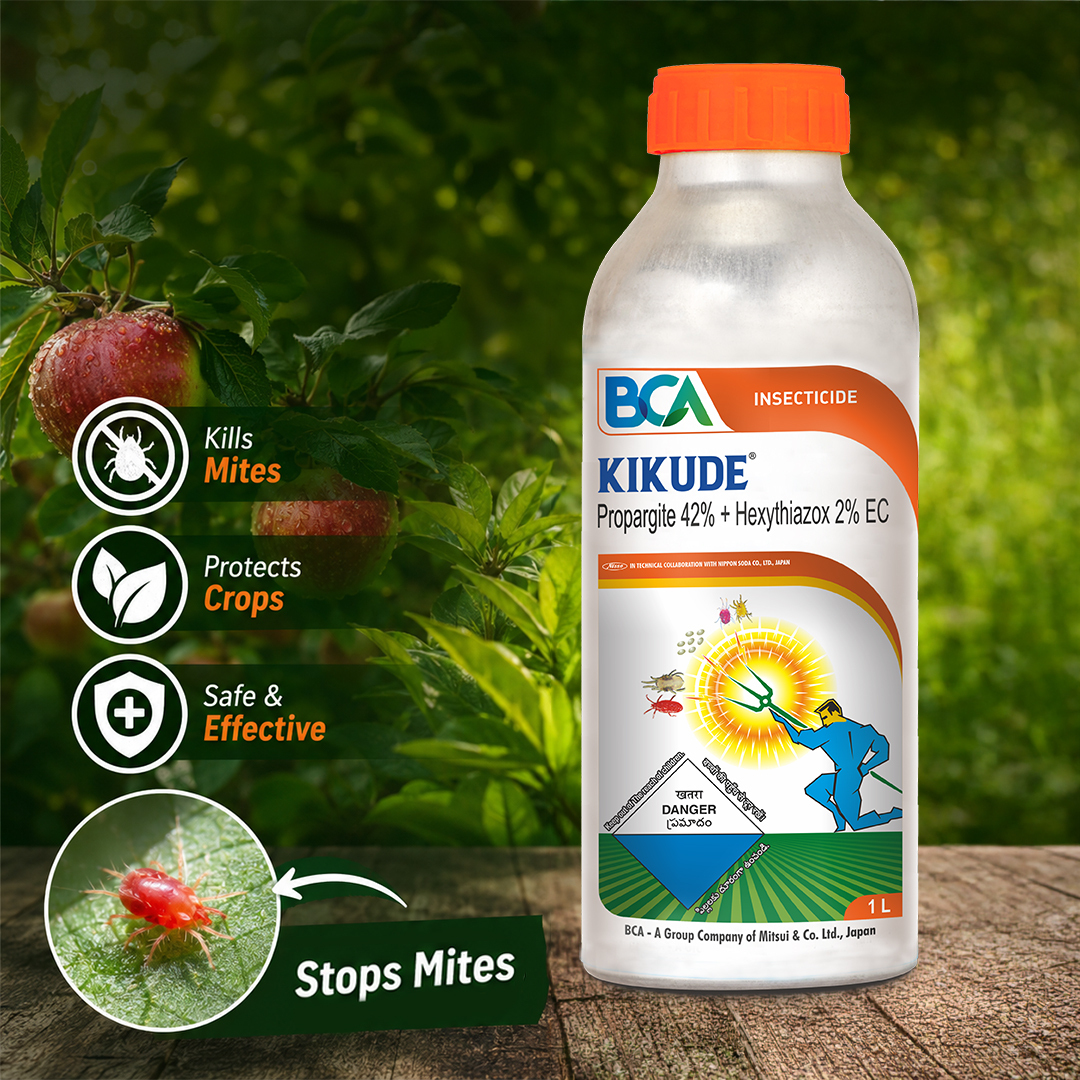
The Advanced Shield: Kikude Acaricide by Bharat Certis
To halt mite damage instantly and provide long-lasting residual protection, Bharat Certis AgriScience introduces Kikude, a modern powerhouse in global mite management. Powered by an advanced chemical design, Kikude acaricide is engineered specifically to break the resistance cycle of tough mite populations.
1. True All-Stage Mite Control (Ovi-Larvicidal & Adulticidal)
Most basic market products only kill adult mites, leaving hidden eggs and nymphs untouched to hatch a few days later. Kikude stands apart because it offers a complete lifecycle breakdown. It targets and eliminates mite eggs, nymphs, and adults simultaneously, preventing the pest generation from restarting.
2. Advanced Contact and Translaminar Action
Mites love to hide on the undersides of thick leaf canopies, where direct spray droplets rarely reach. Kikude features exceptional translaminar movement. This means when you spray the chemical onto the top surface of an apple or tea leaf, the solution naturally penetrates through the leaf tissue to the underside, knocking out the hiding mites effectively.
3. Rapid Knockdown and Anti-Feeding Effect
The moment mites come into contact with Kikude, their feeding mechanisms are instantly paralyzed. Even if adult mites don't drop off the leaf immediately, they completely stop damaging your crop, preventing further bronzing or leaf drop — maintaining overall crop health.
Best Practices for Effective Mite Management
To achieve flawless results with Kikude in your orchard or estate, keep these application guidelines in mind:
Thorough Canopy Coverage: Mite populations thrive in dense foliage. Use high-pressure sprayers with adequate water volume (typically 800–1000 liters per hectare for orchards) to ensure every branch and leaf is fully covered.
Scout Early: Don't wait for your trees or tea bushes to turn brown or bronze. Check the older, interior leaves of your plants weekly using a hand lens. If you spot 3 to 5 active mites per leaf, it's time to spray Kikude immediately.
Resistance Management: To prevent mites from developing resistance, avoid using the same chemical family consecutively. Rotate Kikude with other targeted crop protection tools from the Bharat Certis portfolio.
Conclusion
Don't let invisible pests steal your premium market value. By applying Kikude at the first sign of an infestation, you maintain a vibrant, green leaf factory for your crops—ensuring crisp, large apples and healthy, high-yielding tea flushes that command top prices.