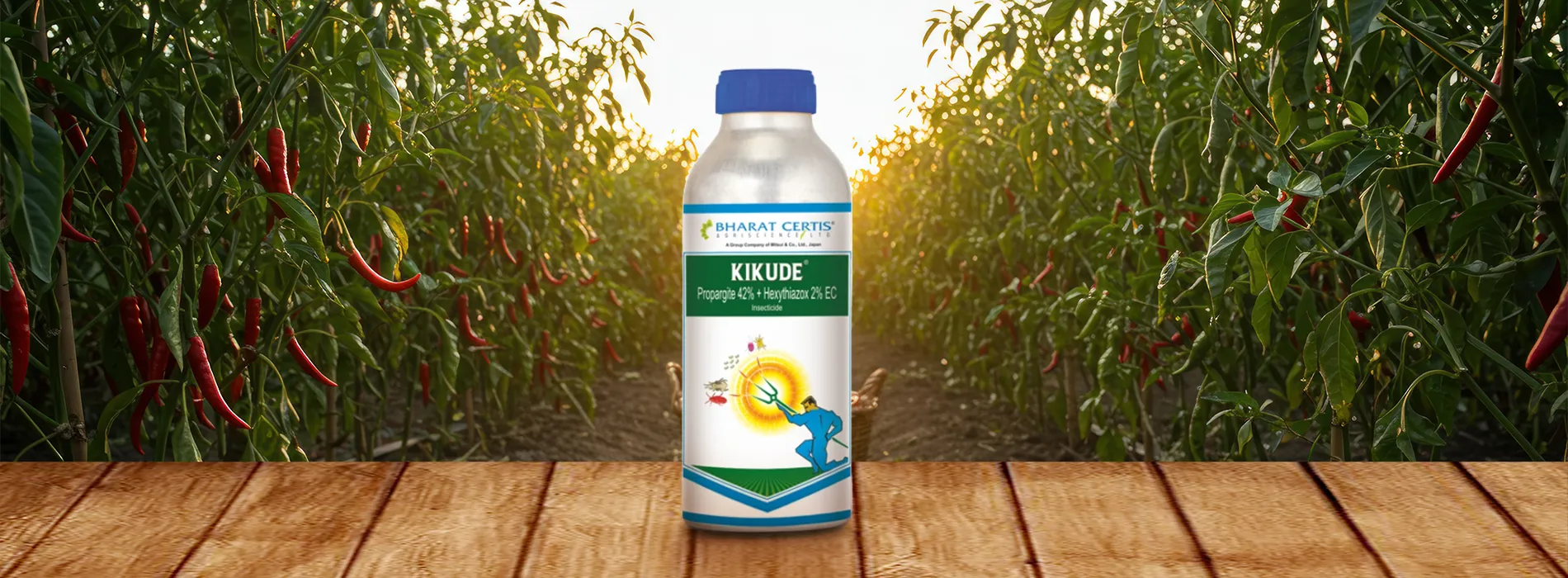
Vegetable farming is a cornerstone of Indian agriculture, providing nutrition and income to farmers across states like Maharashtra, Gujarat, Uttar Pradesh, and Andhra Pradesh. Crops such as chilli and brinjal are high-value but vulnerable to pests like mites, which can cause severe damage to leaves and fruits, leading to yield losses of 20-40%. Understanding mite infestations and control methods is crucial for healthy harvests. In this guide, we'll cover effective strategies and introduce Kikude, an advanced acaricide from Bharat Certis AgriScience Ltd., tailored for vegetable protection.
.webp)
What are Mites in Vegetables?
Mites are tiny arachnids that suck plant sap, causing stippling, bronzing, and defoliation. In vegetables, yellow mites and red mites are common, thriving in warm, dry conditions and spreading rapidly.
Symptoms of Mite Infestation
Early detection prevents widespread damage. Common symptoms include:
- Leaf Stippling: Tiny yellow or white spots on leaves from sap feeding.
- Bronzing or Curling: Leaves turn bronze, curl, or drop prematurely.
- Webbing: Fine silk webs on undersides, especially in severe cases.
- Reduced Yield: Stunted growth, poor fruit set, and deformed produce.
Recognizing these early allows farmers to act swiftly and save crops.
Causes of Mite Outbreaks
Factors promoting mite proliferation in vegetable fields:
- Hot, dry weather with low humidity, accelerating reproduction.
- Overuse of broad-spectrum pesticides, eliminating natural predators.
- Poor sanitation: Infested debris or weeds harboring mites.
- Dense planting: Limited airflow, creating microclimates for mites.
Preventive actions combined with targeted acaricides like Kikude address these effectively.
Preventive Measures
Prevention outperforms cure for mite control. Key steps include:
- Use Healthy Seedlings: Source mite-free plants from reliable nurseries.
- Maintain Spacing: Ensure good airflow to reduce humidity pockets.
- Crop Rotation: Avoid consecutive vegetable plantings to break cycles.
- Sanitize Tools: Clean equipment to prevent spread.
- Monitor Regularly: Inspect leaf undersides weekly for early signs.
Even with these measures, mites may appear, necessitating proven solutions like Kikude.
Kikude: A Reliable Acaricide for Vegetable Mites
Kikude is a contact and stomach action acaricide with Propargite 42% + Hexythiazox 2% EC, providing broad-spectrum control. From Bharat Certis AgriScience Ltd., it targets all mite life stages in vegetables like chilli, offering effective spider mite control.
Features and Benefits of Kikude
- Multi-Stage Control: Ovicidal, nymphicidal, and larvicidal action for complete elimination.
- Immediate Response: Quick knockdown, stopping feeding and damage rapidly.
- Long-Lasting Protection: Reduces re-infestation, minimizing spray frequency.
- Translaminar Action: Penetrates leaves for thorough coverage.
- Crop Compatibility: Safe for vegetables with low PHI for quick harvests.
- Sustainable Option: Spares beneficials when used as directed.
Farmers using Kikude report healthier foliage and better marketable yields.
Recommended Dose for Vegetables
For chilli and similar vegetables, apply at first mite sighting. Reference guide:
| Crop | Target Pest | Dose (ml/acre) | Water (L/acre) | PHI (Days) |
|---|---|---|---|---|
| Chilli | Yellow Mite | 500 | 200 | 7 |
Application Method: Apply as foliar spray, ensuring thorough coverage of leaf undersides where mites hide.
Application Tips
For best results with Kikude:
- Dilute as per label and spray evenly, covering leaf undersides.
- Apply in calm weather to avoid drift.
- Rotate with other modes to prevent resistance.
- Use protective gear and follow safety guidelines.
Integrated Pest Management Strategy
Enhance crop health holistically:
- Cultural Practices: Mulching, proper irrigation, and pruning for airflow.
- Biological Control: Encourage predatory mites or ladybugs.
- Monitoring: Weekly inspections to detect issues early.
Conclusion
Mites pose a serious risk to vegetable crops, but early identification and targeted control can protect yields. Kikude acaricide, with its multi-stage action and long-lasting efficacy, is a dependable choice for managing mites in vegetables. By integrating Kikude with preventive practices like spacing, sanitation, and rotation, farmers can achieve vigorous plants, higher productivity, and premium-quality produce. Success in farming comes from knowledge, vigilance, and the right tools working together.
Frequently Asked Questions (FAQ)
Q1: How does Kikude provide complete mite control in vegetables like Chilli?
A1: Kikude uses a dual-action formula (Propargite + Hexythiazox) that targets all life stages of mites. It provides a rapid knockdown of adults while its ovicidal action ensures that mite eggs do not hatch, effectively breaking the pest's reproductive cycle.
Q2: Can Kikude control both Yellow Mite and Red Spider Mite?
A2: Yes, Kikude is a broad-spectrum acaricide specifically designed for spider mite control. It is highly effective against both Yellow Mites in Chilli and Red Spider Mites in Apple and other vegetable crops.
Q3: What is the advantage of the translaminar action in Kikude?
A3: Since mites often hide on the undersides of leaves, Kikude's translaminar action allows the medicine to penetrate through the leaf surface. This ensures that pests hiding in hard-to-reach spots are eliminated, even if the spray only hits the top of the leaf.
Q4: What is the dosage and waiting period (PHI) for Kikude in Chilli?
A4: For effective mite control, the recommended dose of Kikude is 500 ml per acre. The Pre-Harvest Interval (PHI) or waiting period for Chilli is just 7 days, allowing farmers to harvest their produce soon after treatment.