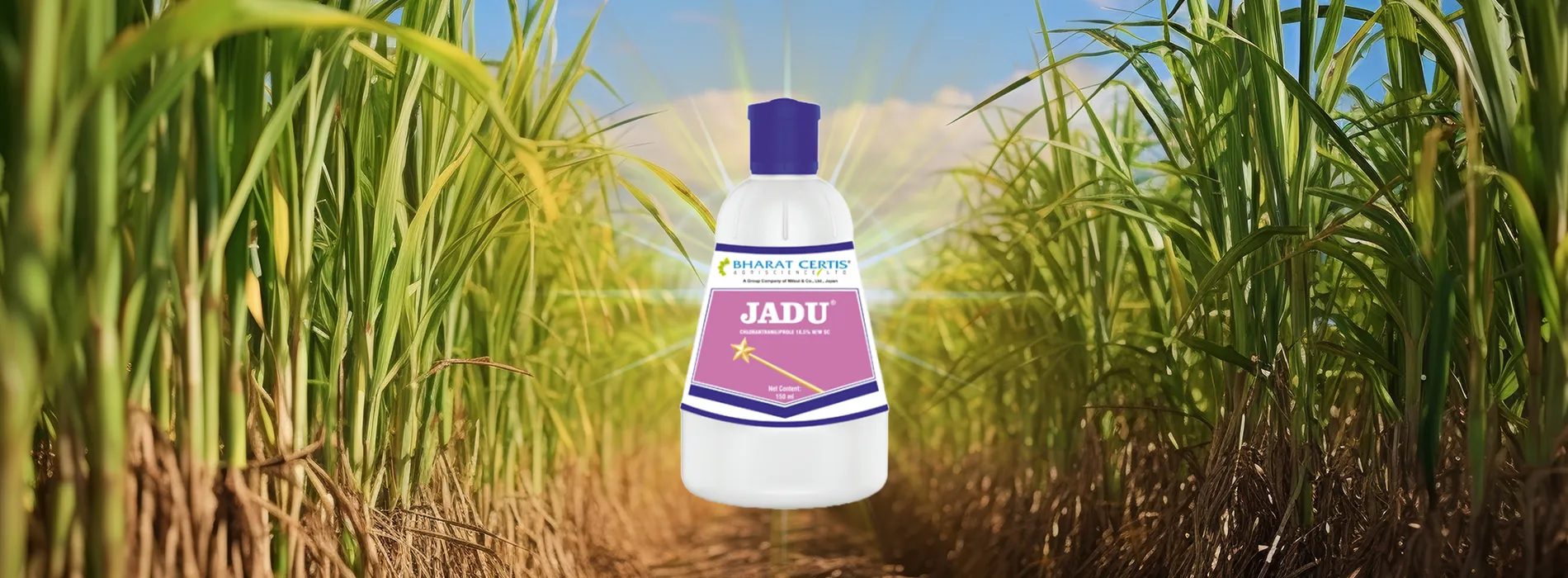
Sugarcane is a vital cash crop in India, supporting millions of farmers and contributing significantly to the sugar industry and rural economy. Major producing states like Maharashtra, Uttar Pradesh, Karnataka, and Tamil Nadu rely on sugarcane for livelihoods and exports. However, pests such as early shoot borers, top shoot borers, and termites pose severe threats, causing extensive damage to stalks and roots, leading to yield losses of up to 20-30% if not managed timely. In this guide, we'll explore strategies for pest control in sugarcane and highlight Jaadu, a powerful chlorantraniliprole insecticide, designed to protect crops effectively and boost profitability.
Understanding Borer and Termite Pests in Sugarcane
These pests attack at critical growth stages, weakening plants and reducing sugar content. Early detection is essential to minimize damage.
Symptoms of Key Pests
- Early Shoot Borer: Dead hearts in young shoots, entry holes with frass, and wilting of central leaves.
- Top Shoot Borer: Bored tunnels in upper stalks, bunchy tops, and reduced internode length.
- Termites: Mud tubes on stems, hollowed roots, and wilting plants due to root damage.
- General Signs: Stunted growth, yellowing foliage, and lodging of canes, especially in infested fields.
If uncontrolled, these pests can devastate entire plantations, but targeted interventions with advanced insecticides can turn the tide.
Causes and Favorable Conditions for Pest Outbreaks
Several factors contribute to pest proliferation in sugarcane fields:
- Warm, humid conditions during planting and early growth stages, ideal for larval hatching.
- Poor soil drainage and high organic matter, attracting termites.
- Monocropping without rotation, allowing pest buildup in residues.
- Delayed planting or irregular irrigation, stressing plants and increasing vulnerability.
Addressing these through good practices sets the stage for effective tools like Jaadu anthranilic diamide insecticide.
Preventive Measures for Pest-Free Sugarcane
Prevention is key to sustainable farming. Integrate these steps:
- Use Resistant Varieties: Choose borer-tolerant hybrids from certified sources.
- Maintain Field Hygiene: Remove and burn crop residues post-harvest to eliminate overwintering pests.
- Practice Crop Rotation: Alternate with legumes or cereals to break pest cycles.
- Soil Treatment: Apply organic amendments like neem cake to deter termites.
- Regular Scouting: Monitor fields weekly during vulnerable stages for early signs.
Combine these with reliable insecticides for a robust defense aligned with integrated pest management.
Jaadu: A Proven Solution for Sugarcane Pests
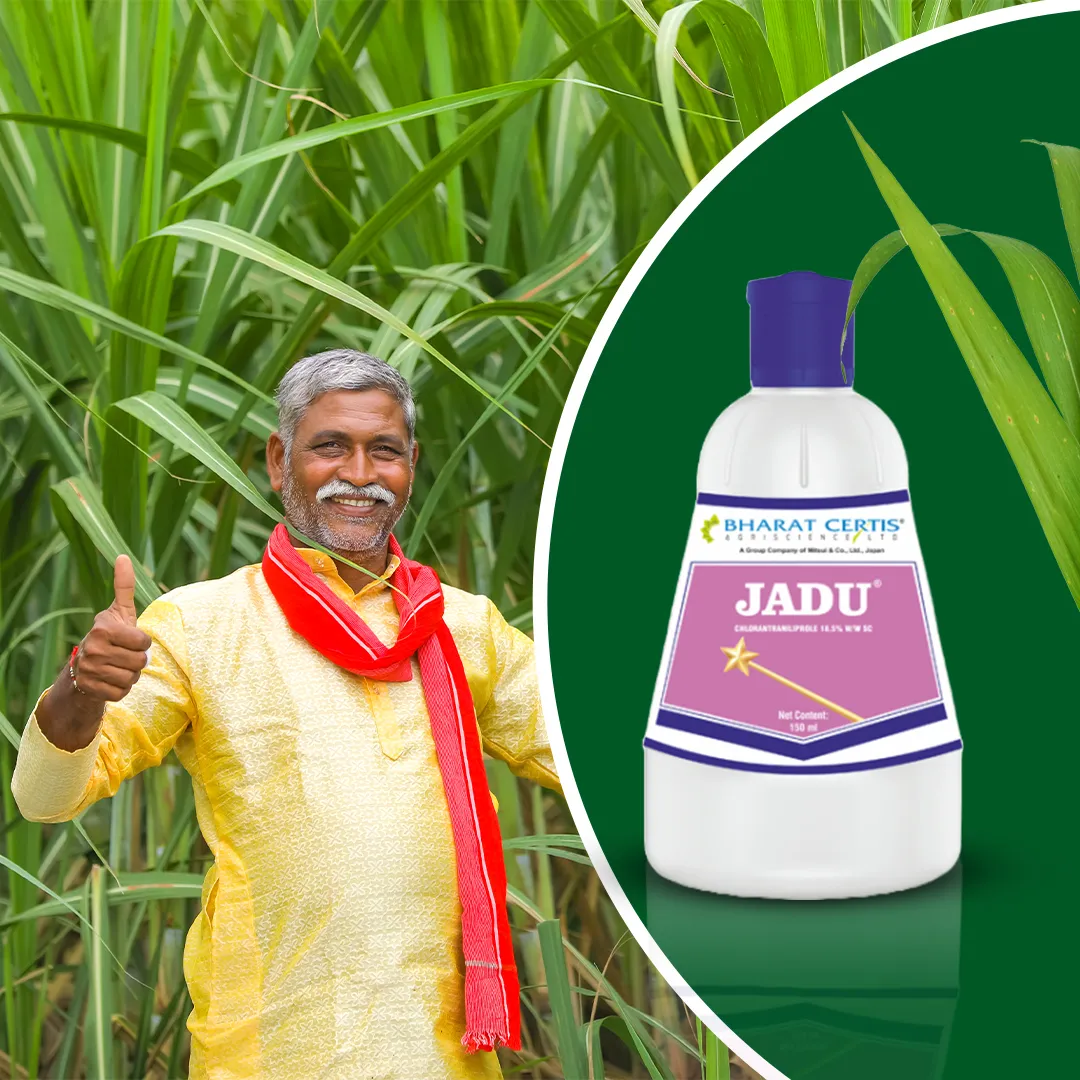
Jaadu is a suspension concentrate insecticide with Chlorantraniliprole 18.5% SC, offering stomach and contact action against lepidopteran pests. Developed by Bharat Certis AgriScience Ltd., it provides broad-spectrum control, making it ideal for sugarcane farmers facing borers and termites through its ryanodine receptor activation.
Features and Benefits of Jaadu
- Rapid Action: Stops pest feeding within hours and causes death in 2-3 days, minimizing crop damage.
- Broad-Spectrum Efficacy: Highly effective on early instar larvae, ensuring control at vulnerable stages.
- Long-Duration Protection: Reduces the need for multiple applications, saving time and costs.
- Versatile Use: Suitable for foliar sprays, with excellent rainfastness for reliable performance.
- Crop Safety: Low phytotoxicity, promoting healthier plants and higher yields.
- Eco-Friendly Profile: Targeted action spares beneficial insects, supporting sustainable farming.
Farmers in Maharashtra report improved stalk quality and yields after using Jaadu, proving its value in modern agriculture.
Recommended Dose for Sugarcane
Apply Jaadu at the onset of pest activity for best results. Here's a crop-specific guide:
| Crop | Target Pest | Dose (ml/acre) | Water (L/acre) | PHI (Days) |
|---|---|---|---|---|
| Sugarcane | Early Shoot Borer, Top Shoot Borer, Termite | 150 (200-250 for Termite) | 400 | 208 |
Soil Drenching: At Planting/Ratoon – For Termites and Early Shoot Borer
Foliar Spray: For Top Borer control
Application Tips
For optimal results with Jaadu:
- Apply early morning or evening to avoid high temperatures.
- Avoid mixing with alkaline products to maintain efficacy.
- Repeat if needed after 10-14 days, based on pest pressure.
- Store in a cool, dry place away from direct sunlight.
Integrated Pest Management with Jaadu
For comprehensive control, combine Jaadu with cultural practices:
- Biological Aids: Release Trichogramma parasites for natural borer suppression.
- Nutrition Balance: Avoid excess nitrogen to reduce pest attraction.
- Weed Control: Keep fields clean to limit alternate hosts.
- Record-Keeping: Track applications and pest levels for informed decisions.
This approach ensures resilient sugarcane farms, even in high-risk areas like Gujarat's borders.
Why Jaadu is Essential for Indian Sugarcane Farmers
In a crop where quality and yield directly impact profits, Jaadu offers reliable protection without compromising sustainability. Its role in pest management supports government initiatives for eco-friendly agriculture, reducing chemical residues and enhancing soil health.
Conclusion
Borers and termites threaten sugarcane productivity, but with proactive measures and timely use of Jaadu chlorantraniliprole insecticide, farmers can safeguard their investments. Jaadu not only controls pests effectively but also promotes plant vigor, lowers input costs, and ensures higher yields. Embrace this advanced solution for pest-free crops and prosperous harvests every season.
Frequently Asked Questions (FAQ)
Q1: How does Jaadu (Chlorantraniliprole 18.5% SC) control Early Shoot Borer?
A1: Jaadu is a potent systemic insecticide that activates ryanodine receptors in the pest's muscles, causing immediate paralysis. This stops the early shoot borer from feeding almost instantly, preventing the formation of "dead hearts" in your sugarcane crop.
Q2: What is the best time to apply Jaadu for effective termite treatment in sugarcane?
A2: For termite treatment, Jaadu should be applied as a soil drench or at the onset of pest activity. The recommended dose for termites is 200–250 ml per acre, which provides a long-lasting protective shield around the roots and base of the stalks.
Q3: What is the Pre-Harvest Interval (PHI) for Jaadu in sugarcane farming?
A3: The Pre-Harvest Interval (PHI) for Jaadu in sugarcane is 208 days. This ensures that the crop is safe for processing and free from chemical residues by the time it reaches the sugar mill.
Q4: Does Jaadu require multiple sprays to manage Top Shoot Borer?
A4: One of the main benefits of Jaadu is its long-term protection. Because of its systemic action and high rainfastness, a single well-timed application typically reduces the need for frequent follow-up sprays, saving farmers significant time and labor costs.